Doctoral Thesis Research
My doctoral thesis, titled “Ab Initio Insights into Molecular Magnetism: A Multireference Study of Transition Metal Complexes”, focused on using multireference methods to study electronic structure and molecular magnetism in transition metal complexes. A brief summary of my work is provided below.
View PhD Thesis Summary Download
The full thesis is available online through the university repository.
Multireference Electronic Structure Methods
I applied multireference methods to study challenging transition metal complexes with open-shell configurations, near-degenerate excited states, and strong (static) and dynamic correlation effects. My work included the use of the following methods:
- CASSCF and NEVPT2: Standard tools for treating static and dynamic correlation.
- QD-NEVPT2: Accurately treats near-degenerate states.
- Approximate Full CI solvers: Handles large active spaces with DMRG or selected CI solvers.
Molecular Magnetism
I investigated magnetic properties of transition metal complexes, including exchange interactions, spin-orbit coupling, and EPR parameters using ab initio methods.
Exchange Interactions
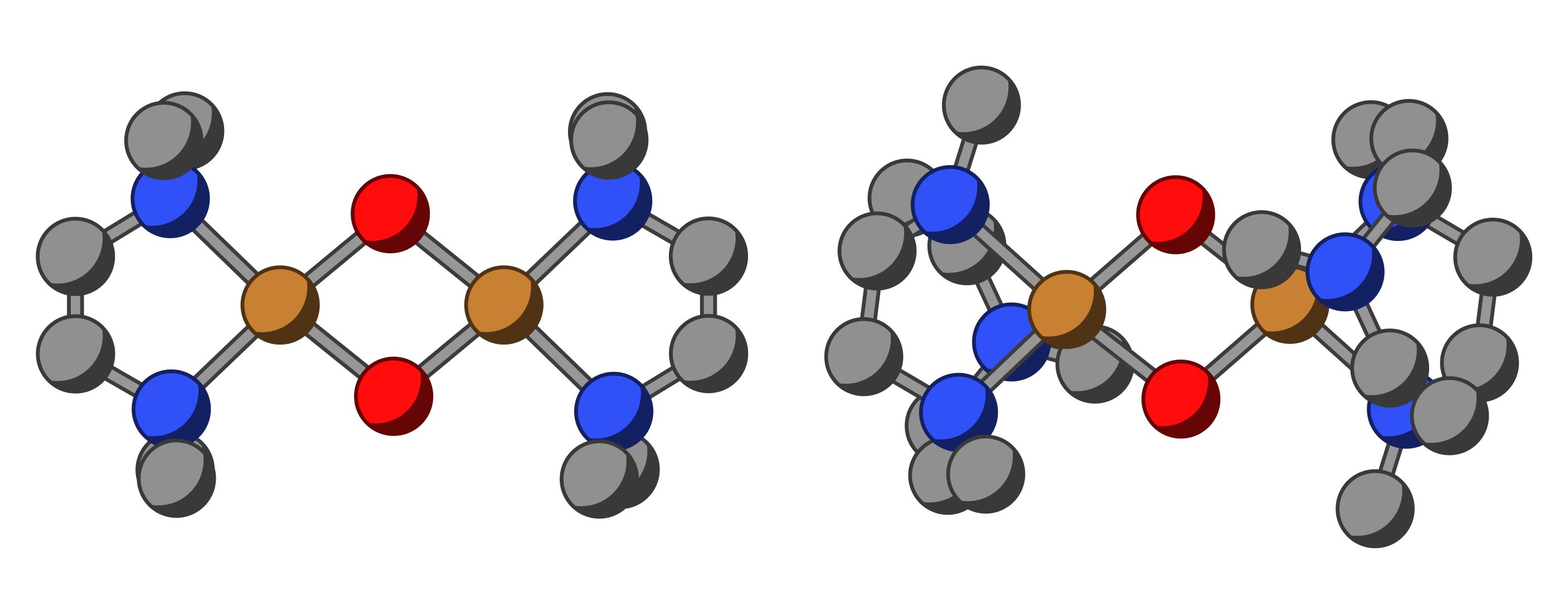
Studied exchange coupling in copper dimers1 (Fig. 1), using the following methods:
- CASSCF/DMRGSCF for static correlation and NEVPT2 for dynamic correlation.
- DDCI method as an alternative for treating dynamic correlation, found to be the most accurate method for Cu dimers.
- A new BS-LPNO-CCSD approach, combining broken-symmetry theory with local coupled-cluster method, as an alternative to the standard BS-DFT.
Spin-Orbit Coupling and g-tensors
Studied electronic structure of a cobalt-oxo intermediate (Fig. 2).2
- Collaborated with experimentalists, where we resolved the ambiguity in the characterization of the intermediate by proposing two interconvertible tautomers.
- Calculated \(g\)-tensors using CASSCF + NEVPT2 to probe the electronic structure.
Developed a new framework combining QD-NEVPT2 with selected CI references (based on Ugandi and Roemelt’s spin-pure heatbath CI3) for calculating spin-orbit coupling and \(g\)-tensors.
- Implemented the methodology in the HUMMR program.4
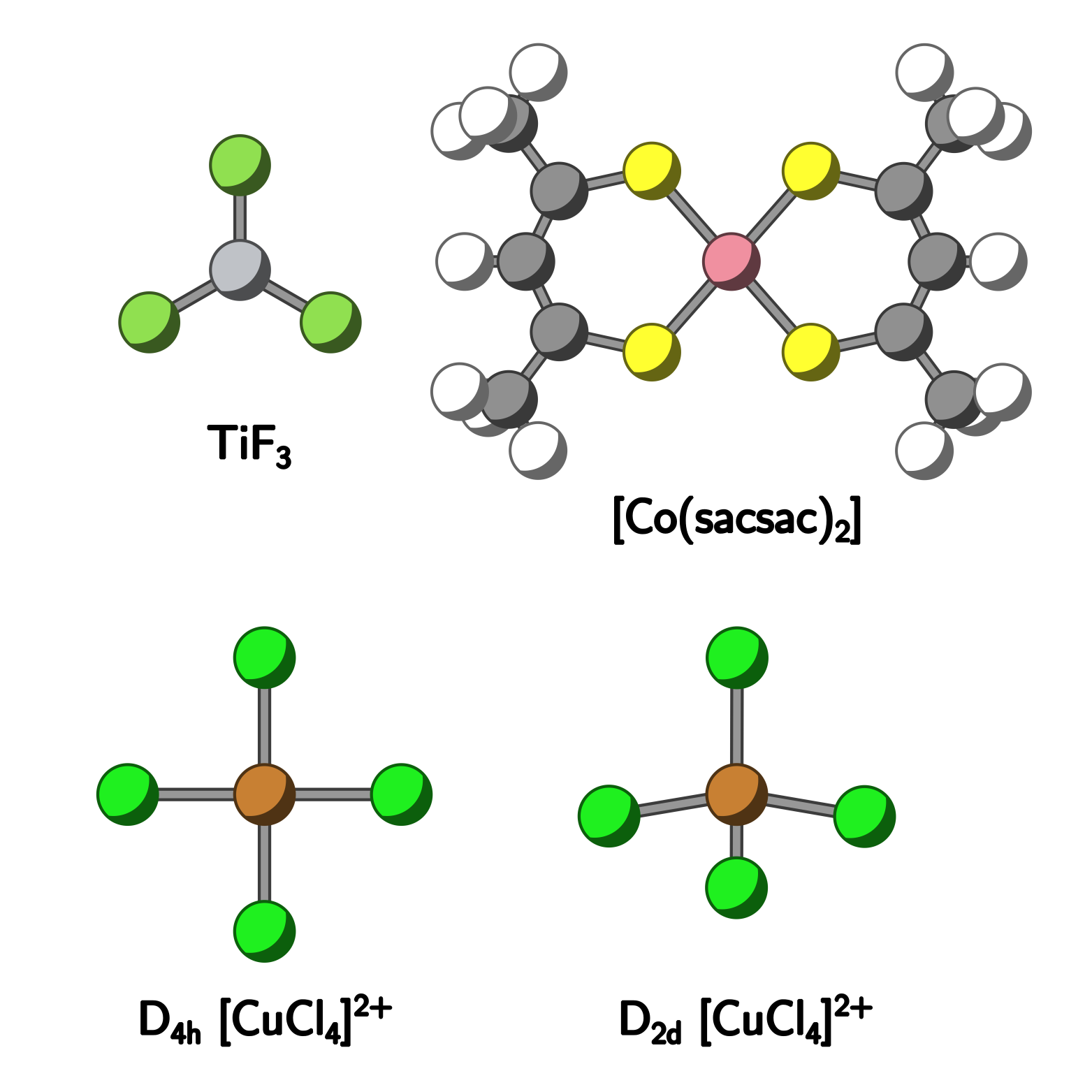
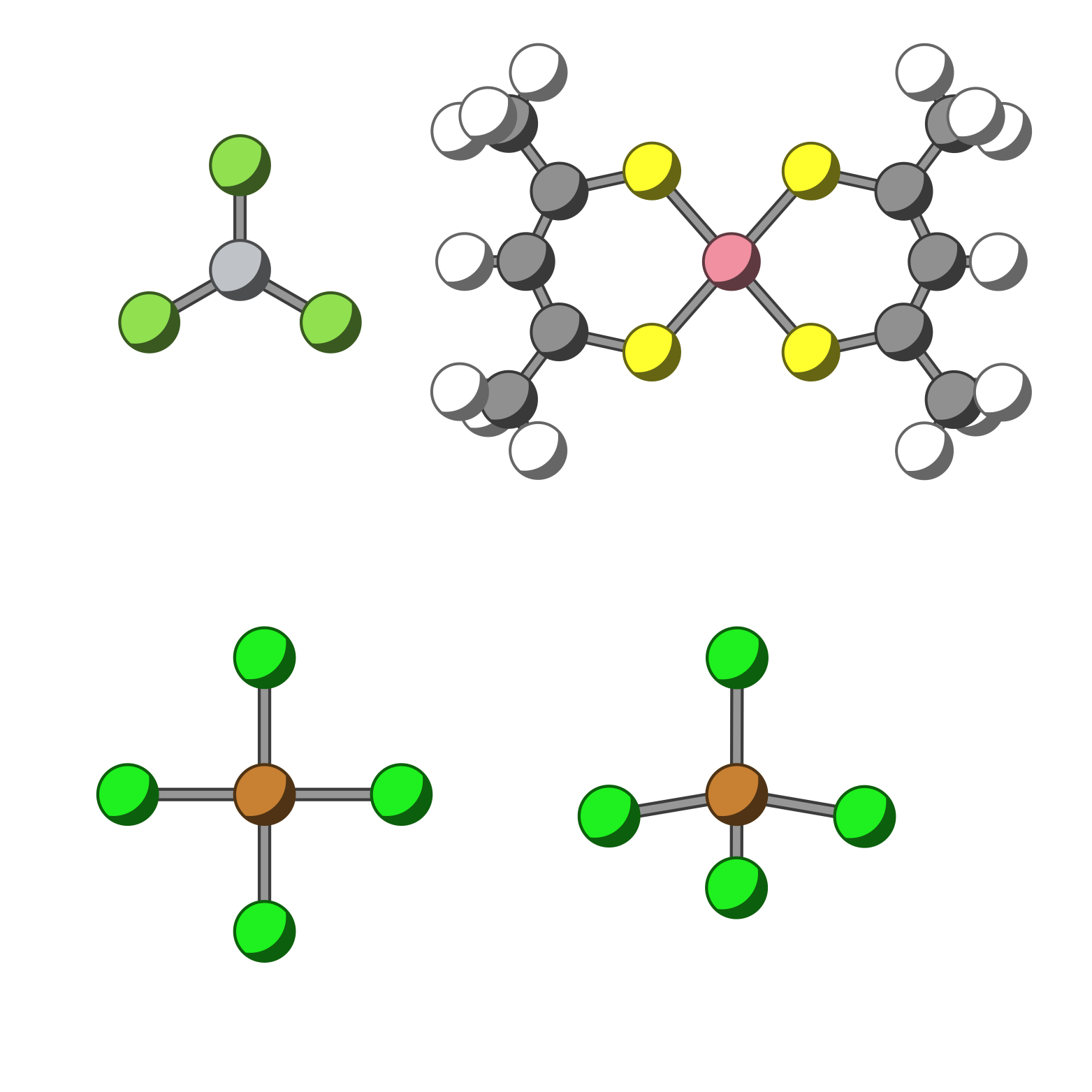
- Tested and validated on benchmark systems (Fig. 3).
Footnotes
Singh, G.; Gamboa, S.; Orio, M.; Pantazis, D. A.; Roemelt, M. Magnetic Exchange Coupling in Cu Dimers Studied with Modern Multireference Methods and Broken-Symmetry Coupled Cluster Theory. Theor. Chem. Acc. 2021, 140 (10). https://doi.org/10.1007/s00214-021-02830-0↩︎
Malik, D. D.; Ryu, W.; Kim, Y.; Singh, G.; Kim, J.-H.; Sankaralingam, M.; Lee, Y.-M.; Seo, M. S.; Sundararajan, M.; Ocampo, D.; Roemelt, M.; Park, K.; Kim, S. H.; Baik, M.-H.; Shearer, J.; Ray, K.; Fukuzumi, S.; Nam, W. Identification, Characterization, and Electronic Structures of Interconvertible Cobalt–Oxygen TAML Intermediates. J. Am. Chem. Soc. 2024, 146 (20), 13817–13835. https://doi.org/10.1021/jacs.3c14346↩︎
Ugandi, M.; Roemelt, M. A Configuration-Based Heatbath-CI for Spin-Adapted Multireference Electronic Structure Calculations with Large Active Spaces. J. Comput. Chem. 2023, 44 (31), 2374–2390. https://doi.org/10.1002/jcc.27203↩︎
HUMMR User Guide: hummr-dev-team.pages.cms.hu-berlin.de↩︎